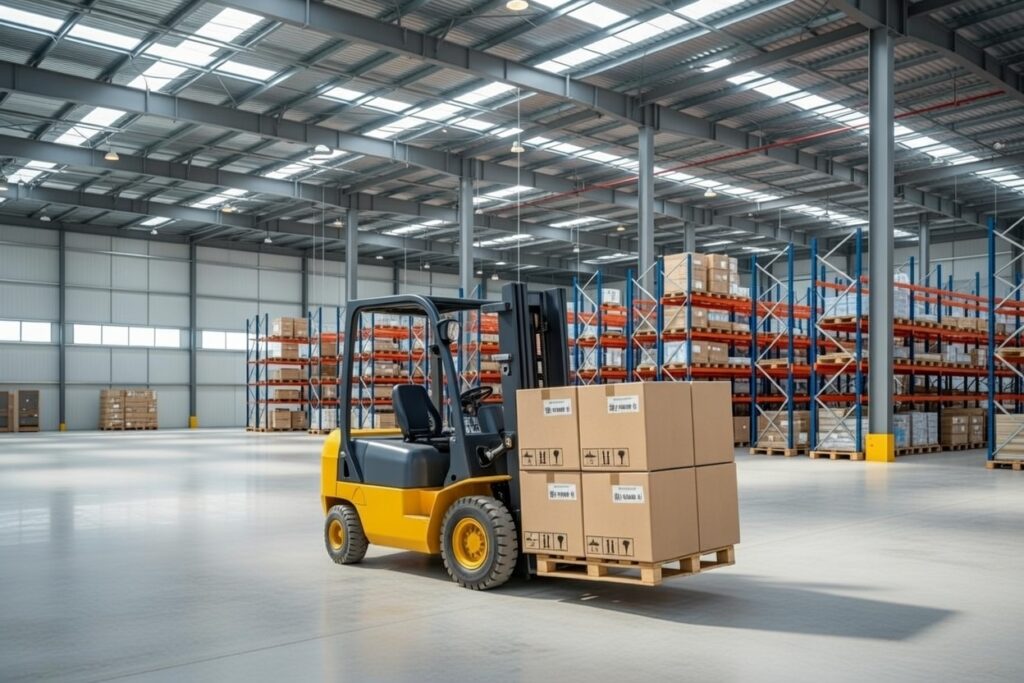
Key warehouse racking safety tips include proper installation, regular inspections and maintenance, adherence to load capacities and following safety protocols. Proper warehouse racking provides safe, efficient and profitable logistical operations. Implementing these tips and rigorous safety standards avoid significant downtime and financial losses. Prioritizing safety through training, proper equipment management and organized workflows help prevent injuries and accidents, resulting in a safer work environment that boosts employee morale.
Stop the Drop: Rack Safety Tips For a Secure Warehouse
For 20 years, my friend Liam worked the floor of a bustling warehouse near the Port of Savannah. One humid August afternoon, safety took a backseat, under the pressure of a rushed shipment destined for a retailer near the Georgia Aquarium. He ignored the slight bend in the steel beam during his final walkthrough. The unanchored rack gave way at 3 am, turning thousands of dollars of inventory into a twisted heap of metal, blocking entry way and damaging machinery. This forced a shutdown, threatening local jobs. If you are searching for warehouse racking near me, read our guide below for the best safety practices.
| Did you know?In 2026, warehouses are empowering workers with technology to improve safety through automation. Collaborative robots (cobots) work alongside workers, handling difficult, repetitive tasks, minimizing fatigue and strain. |
Professional Installation and Setup
Do you know that Georgia boasts the 4th busiest container port in the US, with 85% of the world’s top third party logistic companies operating in the state? Proper racking installation provides safer grounds for your systems.
- Use certified installers who understand safety regulations and manufacturer’s specifications.
- Follow the manufacturer’s guidelines that meet the assembly requirements of each racking system.
- Make sure your warehouse floor is level to support the weight of racks and loads.
- All pallet racks must be securely anchored to the floor to prevent tripping or shifting.
- Clear aisles reduce the risks of forklift collisions, and allow for safe and easy manoeuvring.
| Important factPoorly stacked inventory causes more than 20,000 injuries per year. Forklifts cause around 25% of all warehouse injuries, averaging around 95,000 injuries and 100 fatalities every year. |
Visibility and Signage
- From fork operators to visitors, make sure you have markings in place to direct everyone.
- All places should be well-lit to ensure visibility and prevent accidents.
- Rackings should be correctly labelled to identify which items are placed where.
- Use bright colors for the beams, to differentiate them from the pallets, and avoid accidents.
- Source labels from ID Label inc to ensure compliance with OSHA regulations.
- Did you know that a warehouse often ranks as the third most dangerous job across industries? OSHA regulations on warehouse safety enforces safety standards that ensure better workplace health and safety.
Regular Inspections and Routine Maintenance
Regular inspections and routine maintenance prevents minor issues from turing into major accidents, reducing injuries and losses.
Replace Damaged Component without Delay: Don’t ignore rusted parts, missing screws or bent uprights.
Ensure a Clutterfree Environment: Keeping the area clean minimizes chances of collision, slips and accidents.
Daily visual check: Train your forklift drivers and staff to look for any signs of visible damage at the start of every shift, like missing safety clips or misaligned pallets.
Weekly and Monthly audits: Make sure the designated supervisors regularly walk through, checking for bent beams, uprights and sheared anchors.
Annual, Expert Inspection: A qualified third party inspector should undergo detailed inspection to identify any slight signs of stress and damage that internal teams might have missed.
Implement a color-coded traffic light system.
- Green denoting observation for minor, surface damages.
- Amber reflecting hazard, highlighting the need for unloading and immediate attention.
- Red implying real danger, highlighting the need for isolating the area instantly and unloading.
Adhere to Load Capacity Management
Overloading is the leading cause of injuries and racking failures.
Never exceed your load limit.
Each rack must have a clear, maximum load limit, posted on signs.
Distribute weight evenly.
Place heavier pallets/items on the lower racks to increase stability.
Strict Adherence to Standards.
Make sure all pallets are in good condition, properly placed and distributed to reduce the risk of accidents and losses.
Remove Damaged Pallets.
Broken or damaged pallets can fall, causing serious damage to workers and resulting in losses.
| Fast Fact25% of all warehouse accidents occur at the loading dock. For every loading dock injury, there are over 600 near misses, making it a hotspot for serious accidents. |
Investing in Rack Protection Systems
- Install column protectors at the base of rack uprights to prevent forklift damage, that can weakn the structure.
- Install the end of aisle guards to protect the most vulnerable end of row uprights with heavy-duty barriers.
- Install safety netting/ wire mesh on the back of racks, to prevent items from falling and improve worker’s protection.
Using the Right Types of Racks
- Allow adequate aisle space to reduce the risks of collisions.
- Choose racking systems that match your inventory requirements, in terms of weight and volume.
- Aiming and designing for flexibility helps your business to evolve steadily, resulting in business growth without compromising safety.
Training and Safety Culture
A well-trained team is the right team that aids business growth and minimizes risks.
- Make sure your team knows about and uses warehouse PPE.
- Understand how to stack loads evenly and avoid overloading racks to prevent accedents.
- Empower your workers to report all safety concerns or impact immediately without fear of punishment.
| Common Safety Issues in Warehouses |
| Poorly secured or overloaded racks can cause rack failure and collapse.Forklift accidents happen due to improper operations and maintenance.Loading dock hazards can be reduced through installing guardrails, visual alerts and dock levelers.Conveyors pose serious safety risks, including getting caught in the equipment.Flammable materials, charging stations, improper storage and electrical issues can cause fires.If pathways are not clearly marked, this can compromise pedestrian safety. Ensure designated walkways and alert systems.Hazardous chemicals require safer handling, proper labeling and improved ventilation. |
Conclusion
By implementing and following warehouse safety tips, help ensure a safe and compliant working environment. Don’t let a “never miss” become a “never again.” From pallet racks to custom storage solutions, Georgia Pallet Rack offers a range of cost effective solutions, helping Georgia warehouses apply proven safety practices, based on industry standards such as OSHA and RMI (Rack Manufacturer’s Institute), ensuring it operates at its best.
FAQs
How can I stop forklift drivers from damaging racks?
Use rackguards, end of isles protectors, and rub rails to absorb impact. Train operators on safe navigation. Ensure high visibility paint is used on racking and maintain, wide, unobstructed isles for safe maounvering.
How do I prevent falling items?
Install safety netting on the back of the racks to catch falling items. Use backstop beams to prevent pallets from being pushed too far back. Use stretch wrapping or banding to stabilize loose or unboxed materials.
How often should warehouse racks be inspected?
Forklift operators should perform informal, visual checks daily at the start of the shift. A designated supervisor should perform a documented, formal walkthrough on weekly and monthly basis.