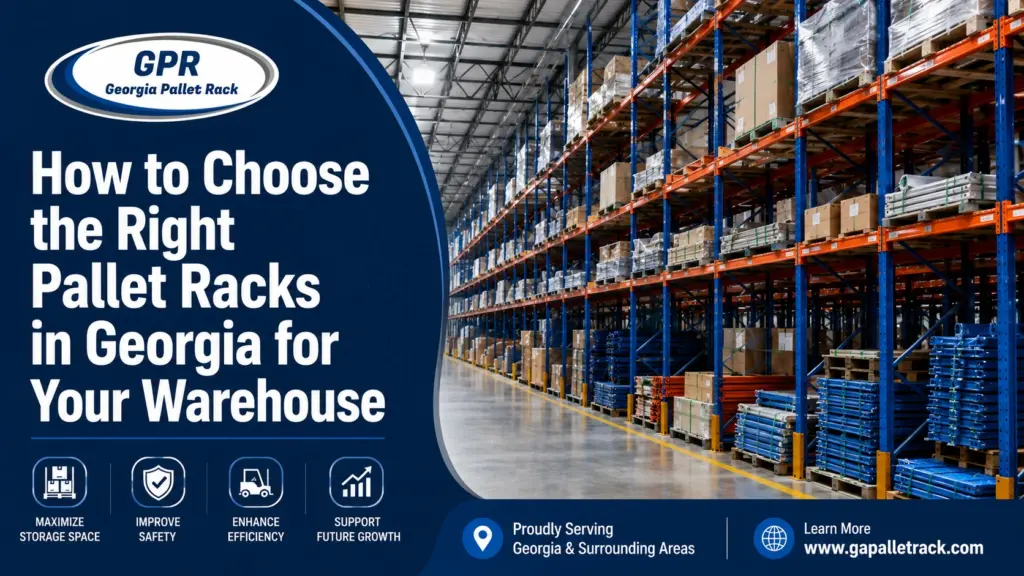
Choosing the right pallet racking system is important for any warehouse. The right racks can increase storage capacity, improve organization, and support safer daily operations. However, every warehouse has different inventory, equipment, and space requirements.
When comparing pallet racks in Georgia, consider your products, available floor space, forklift access, budget, and future growth plans. A system that works for one facility may not be suitable for another.
Start With Your Inventory
Begin by reviewing the products stored in your warehouse and how frequently they move. Consider whether your inventory uses standard pallets, includes different product sizes, or requires direct access to every pallet.
If your warehouse stores many different products, selective pallet racks may be the most practical choice because they provide direct access to each pallet. If you store large quantities of similar products, a high-density system such as drive-in or push-back racking may use your space more efficiently.
Understand the Main Rack Types
Selective Pallet Racks
Selective racking is one of the most common warehouse storage systems. It provides access to every pallet and works well for facilities with a wide variety of products. The system is flexible and compatible with common forklifts, although it usually requires more aisle space than high-density alternatives.
Drive-In Pallet Racks
Drive-in racking allows forklifts to enter storage lanes, creating a high-density layout. It is useful for warehouses that store large quantities of the same product. Since access is more limited, it is generally better for products with slower turnover or fewer variations.
Push-Back Pallet Racks
Push-back racks use inclined rails and carts to store pallets several positions deep. They provide greater density than selective racks while allowing access from the front. This makes them useful for warehouses that need a balance between storage capacity and accessibility.
Pallet Flow Racks
Pallet flow systems use rollers or wheels to move pallets through the rack. They can support first-in, first-out inventory rotation and improve product movement. However, they may require more planning and a higher initial investment.
Measure Your Warehouse Carefully
Before choosing a rack system, measure more than the available floor area. Review ceiling height, doorways, structural columns, loading areas, emergency exits, and aisle widths.
Your forklift type also matters. The rack layout must provide enough room for forklifts to turn, lift, and place pallets safely. Sprinklers, lighting, ventilation, and other building systems must remain accessible. Depending on the facility and local requirements, racks may also need proper anchoring and clearance around fire protection equipment.
Evaluate Load Capacity
Every rack component must be able to support the weight of the products stored on it. Plan for the heaviest expected load instead of relying only on average pallet weight.
Capacity depends on beam length, upright height, beam strength, storage levels, pallet dimensions, and load distribution. Rack capacities should be clearly identified, and damaged beams, uprights, or safety components should be inspected before use.
Never modify a rack system without confirming that the changes are safe and compatible with its design. Overloaded or improperly installed racks can create serious risks for employees, inventory, and equipment.
Consider New and Used Racks
Used pallet racks can help control costs, but they should be inspected carefully before purchase. Look for bent uprights, damaged beams, corrosion, missing safety components, and signs of improper repairs or modifications.
The least expensive option is not always the best value. A safe, compatible, and durable system can reduce maintenance problems and replacement costs over time. In some cases, combining new components with inspected used equipment may be a practical solution.
Plan for Future Growth
Your warehouse may need more storage space as inventory increases or operations change. Consider whether product sizes, order volume, equipment, or picking methods may change in the future.
Modular pallet racking can make it easier to add levels, rearrange bays, or expand storage areas. Planning for future needs can reduce the cost and disruption of replacing an entire system later.
Prioritize Safety and Professional Installation
Proper installation is just as important as selecting the right rack design. Racks should be installed correctly, anchored where required, and protected from forklift impact when necessary. Employees should also be trained to load, unload, and inspect the system properly.
When comparing pallet racks in Georgia, work with a supplier or installer that understands warehouse layouts, load requirements, and local safety considerations. Professional guidance can help you avoid costly mistakes and create a system that supports efficient operations.
Georgia Pallet Rack provides a range of warehouse storage products and services, including selective, push-back, drive-in, and pallet-flow systems. Its product options include used pallet racks, uprights, step beams, pallet supports, and row spacers. The company also offers rack installation, replacement, take-down, relocation, and custom storage solutions. By matching the right products and services to your facility, you can improve organization, use available space efficiently, and support safer warehouse operations.