
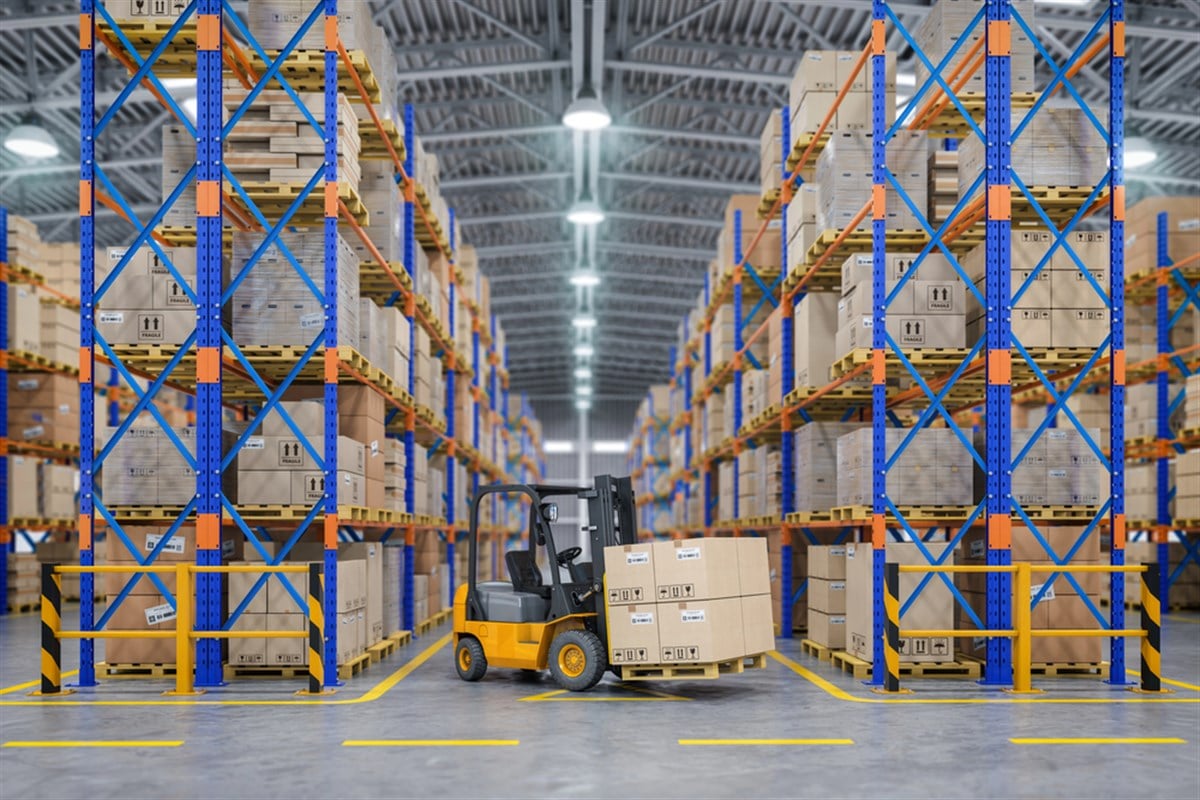
Pallet racking is a warehouse storage system designed to hold palletized products on horizontal beams supported by vertical frames. It allows warehouses to store large volumes of inventory vertically, maximizing space, organization, and forklift access.
The most common type is selective pallet racking, which allows direct access to every pallet.
What are the different types of warehouse racking systems?
The main types of warehouse racking include:
- Selective pallet racking
- Drive-in and drive-thru racking
- Push-back racking
- Pallet flow racking
- Cantilever racking
- Double-deep pallet racking
- Carton flow and shelving systems
Each system is designed for different inventory types, warehouse layouts, and picking methods.
What is the most common type of pallet racking?
Selective pallet racking is the most widely used warehouse racking system in the world.
It is popular because it:
- Works with almost any forklift
- Provides direct access to every pallet
- Is cost-effective
- Is easy to reconfigure
- Meets most warehouse storage needs
How much does pallet racking cost?
Pallet racking costs depend on:
- New vs used racking
- Height and depth
- Beam capacity
- Total square footage
- Installation requirements
- Engineering and permits
On average, pallet racking can range from $75 to $300 per pallet position installed, depending on the system and condition.
The only accurate way to price pallet racking is through a layout and material takeoff.
Is used pallet racking safe?
Yes — if it is properly inspected, certified, and installed.
Used pallet racking is commonly used across warehouses, distribution centers, and manufacturing facilities. The key is:
- Structural inspection
- Verified capacities
- Damaged components removed
- Professional installation
- Anchoring and safety accessories
Bad racking isn’t “used” — it’s uninspected.
How tall can warehouse racking be?
Warehouse pallet racking can range from 8 feet to over 40 feet tall, depending on:
- Building height
- Local codes
- Load requirements
- Forklift reach
- Engineering approval
Most modern warehouses operate between 20 and 32 feet of clear racking height.
How much weight can pallet racking hold?
Pallet racking capacity depends on the beam size, steel gauge, upright design, and system configuration.
Typical capacities range from:
- 2,000 lbs per pallet
- 5,000 lbs per pallet
- 10,000+ lbs per level in heavy-duty systems
Capacity is never guessed. It is calculated and engineered.
Does pallet racking need to be anchored?
Yes.
Warehouse racking must be anchored to the concrete floor.
Anchoring prevents:
- Collapse
- Forklift impact failures
- Progressive rack failure
- OSHA violations
Unanchored racking is one of the most common warehouse safety violations.
What is the difference between warehouse racking and shelving?
Warehouse racking is designed for palletized loads handled by forklifts.
Shelving is designed for hand-stacked, smaller items.
Racking is structural steel.
Shelving is light or medium duty storage.
What is cantilever racking used for?
Cantilever racking is used for long, bulky, or irregular items such as:
- Lumber
- Pipe
- Steel
- Furniture
- Drywall
- Sheet goods
It uses arms instead of beams, allowing materials to be stored without front columns blocking access.
How do I know what racking system my warehouse needs?
The correct racking system depends on:
- Product type
- Pallet size and weight
- Forklift type
- Picking method
- Inventory turnover
- Building dimensions
- Fire code requirements
A professional warehouse layout maximizes storage density while maintaining safety and workflow efficiency.
What is warehouse racking installation?
Warehouse racking installation includes:
- Floor layout and measurement
- Upright and beam assembly
- Anchoring to concrete
- Row alignment
- Safety accessories
- Load capacity signage
- Final inspection
Improper installation causes more rack failures than bad material.
How long does it take to install pallet racking?
Most pallet racking installations take 1 to 5 days, depending on:
- System size
- Warehouse conditions
- Ceiling height
- Lift equipment
- Engineering scope
Does pallet racking need to be inspected?
Yes.
Pallet racking should be inspected:
- After installation
- After any forklift impact
- At least once per year
- When layouts are changed
Inspections identify damaged uprights, twisted frames, and overloaded beams before they become catastrophic.
What are warehouse racking safety requirements?
Warehouse racking safety includes:
- Anchors and shims
- Load capacity signage
- Upright protection
- End-of-aisle guards
- Row spacers
- Seismic considerations
- Fire protection compliance
Racking safety is both a structural and legal responsibility.
Can pallet racking be moved or reconfigured?
Yes.
One of the biggest advantages of pallet racking is modularity.
Racking can be:
- Expanded
- Relocated
- Reconfigured
- Raised or lowered
- Converted to different systems
This is why warehouses invest in racking instead of permanent shelving.
What is warehouse racking made of?
Warehouse pallet racking is made from high-strength roll-formed structural steel, engineered to handle vertical loads, impact forces, and seismic stresses.
What happens if pallet racking fails?
Rack failures can result in:
- Inventory loss
- Equipment damage
- Building damage
- Serious injury
- Fatalities
- Lawsuits
- OSHA shutdowns
Racking is not furniture.
It is industrial infrastructure.