
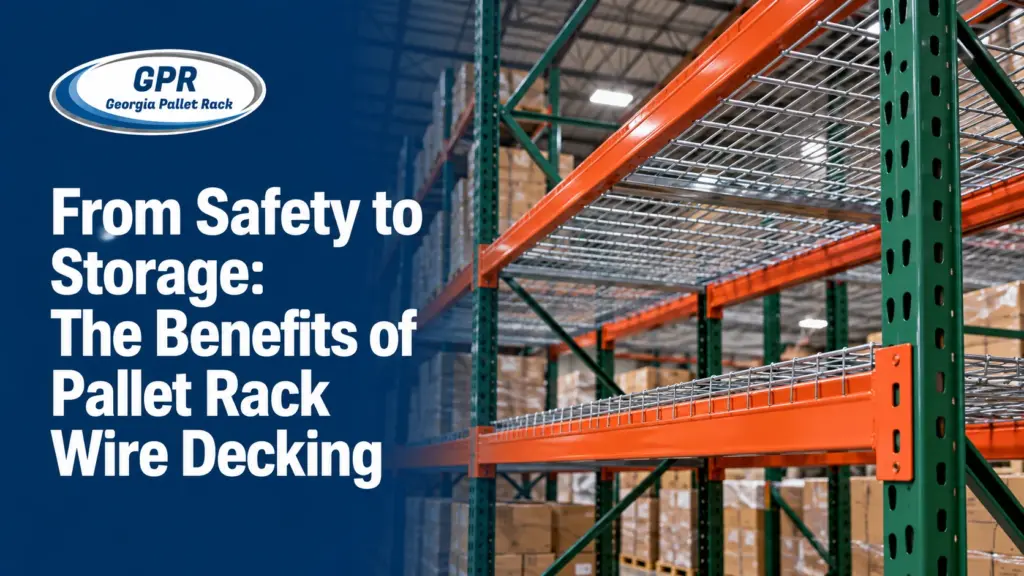
Pallet rack wire decking is a practical component used to improve the safety, organization, and usability of warehouse storage systems. Installed across pallet rack beams, wire decks create a stable surface beneath stored loads while allowing light and sprinkler water to pass through. For many facilities, this simple addition can make rack storage more functional and easier to manage.
Choosing pallet rack wire decking requires attention to load capacity, rack dimensions, pallet type, and warehouse safety requirements. The right deck should fit the existing rack system and support the way products are stored, handled, and inspected.
What Is Pallet Rack Wire Decking?
Pallet rack wire decking consists of welded steel wire panels placed across horizontal rack beams. The panels provide a supportive surface for pallets and help prevent products from falling through open rack levels.
Unlike solid decking, wire decking has an open design. This allows warehouse lighting to reach lower levels and can help sprinkler water move through the rack during a fire emergency. The exact design and capacity depend on the panel size, wire gauge, support structure, and manufacturer specifications.
Improved Warehouse Safety
One of the main reasons businesses use pallet rack wire decking is to create a more secure storage surface. Pallets that are damaged, undersized, or not positioned perfectly may be difficult to support on beams alone. Wire decking provides additional support and helps reduce the chance of products slipping between the beams.
The panels can also help contain smaller items that might otherwise fall from elevated rack levels. This can reduce hazards for employees working or walking below the storage area. However, wire decking is not a replacement for proper loading practices, rack protection, or regular inspections.
Better Load Support and Organization
Wire decking distributes pallet loads across the rack structure instead of leaving the load supported only at a few contact points. This can make storage levels more consistent and provide a clearer surface for placing pallets.
A more defined storage surface can also help employees keep products aligned within each bay. This improves organization and makes it easier to identify misplaced or unstable loads during routine warehouse checks.
The decking must still be selected according to the expected load. Warehouse owners should not assume that every wire panel can support every pallet. Capacity should be confirmed based on the panel design, span, load distribution, and rack configuration.
Fire Safety and Visibility Benefits
The open structure of pallet rack wire decking allows air, light, and water to pass through more easily than solid surfaces. This can support visibility between rack levels and help sprinkler systems reach stored materials more effectively.
Wire decking does not make a warehouse fireproof, and it should not be treated as a substitute for a properly designed fire protection system. Sprinkler clearances, flue spaces, rack height, and stored product characteristics must still be reviewed according to the facility’s requirements.
Easier Inventory Handling
Pallet rack wire decking can create a more predictable surface for forklifts and employees to work around. When pallets sit evenly within rack bays, operators may have an easier time placing and retrieving loads.
The open surface also makes it easier to see products from different angles. Better visibility can help employees identify inventory, inspect storage levels, and notice damaged packaging without moving every pallet.
How to Choose the Right Wire Decking
Measure the Rack System
Before purchasing decking, measure the distance between the rack beams, the bay width, and the depth of each storage level. Panels must fit securely without creating unsafe gaps or overhangs.
Check Load Requirements
Review the weight and dimensions of the pallets being stored. Consider the heaviest expected load, not only the average pallet. The deck’s rated capacity should match the way the load will be distributed across the panel.
Consider Pallet Type
Wooden, plastic, and specialty pallets may interact differently with wire decking. Pallet dimensions, feet, runners, and bottom construction can affect stability. Confirm that the selected panel supports the pallets used in the warehouse.
Review Rack Compatibility
Wire decking should be compatible with the existing beams and rack design. A qualified installer or storage specialist can help identify the correct panel style and support requirements before installation.
Installation and Maintenance
Decking should be installed evenly and checked for proper placement before loads are added. Employees should be trained not to exceed marked capacity or use damaged panels.
Routine inspections can identify bent wires, broken welds, corrosion, loose supports, and impact damage. Any damaged decking should be removed from service and evaluated before it is used again.
Georgia Pallet Rack provides warehouse storage products and related services for businesses in Georgia and the greater Atlanta area. Its offerings include pallet racking systems, used pallet racks, pallet rack uprights, step beams, pallet supports, and row spacers. The company also provides rack installation, replacement, take-down, relocation, and custom storage solutions. For businesses evaluating pallet rack wire decking alongside a larger storage project, these products and services can support a warehouse plan based on inventory, equipment, layout, load requirements, and safety needs.