
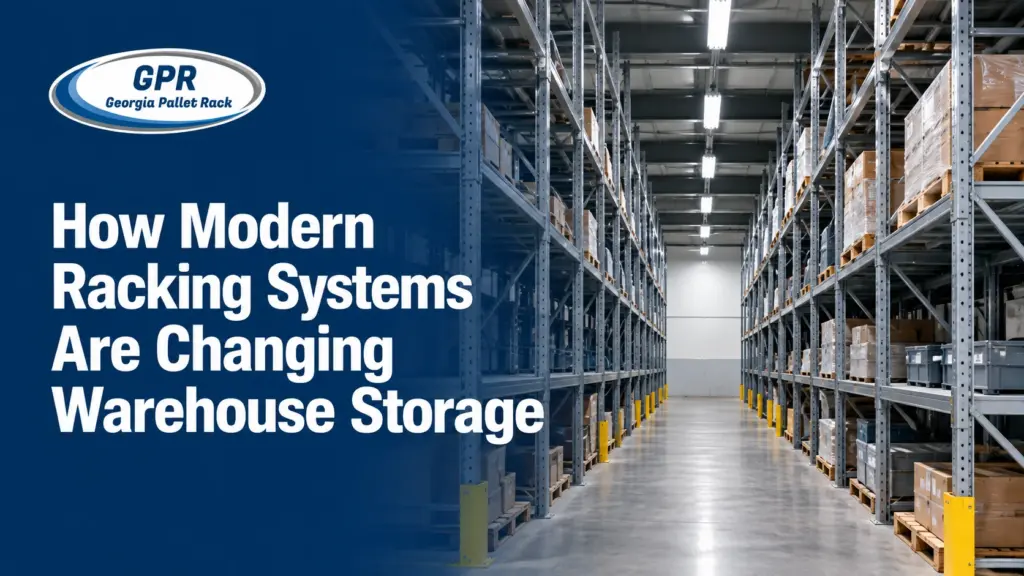
Industrial racking systems are changing how modern warehouses store, organize, and move inventory. Instead of relying only on floor storage, businesses can use vertical space, create defined storage locations, and improve the movement of products and equipment. A well-planned racking system can support efficiency without requiring immediate building expansion.
Modern storage planning is about more than adding rows of steel frames. The right system must match the warehouse layout, product dimensions, load weights, forklift equipment, inventory turnover, and future operating needs. When these factors are considered together, racking can become an important part of a safer and more productive facility.
What Are Modern Racking Systems?
Modern racking systems are structured storage solutions designed to hold products in organized levels or locations. They may include upright frames, beams, pallet supports, safety components, and accessories that help businesses store inventory efficiently.
Depending on the operation, a warehouse may use selective racks for direct pallet access, high-density systems for storing large quantities, or flow-based solutions for faster inventory movement. The most suitable design depends on how products enter, move through, and leave the facility.
Better Use of Vertical Space
One of the biggest changes in warehouse storage is the increased use of vertical capacity. Floor space is limited, but many buildings have unused space above ground level. Industrial racking systems allow businesses to store products at multiple heights instead of spreading inventory across the floor.
Using vertical space can increase storage capacity and improve floor organization. However, rack height must account for ceiling clearance, forklift reach, lighting, sprinkler systems, building conditions, and safe access requirements. Vertical storage is only beneficial when employees can use it safely and efficiently.
Improved Inventory Organization
Modern racking gives products designated locations. This makes it easier for employees to identify inventory, follow picking routes, and return products to the correct place after receiving or replenishment.
Warehouse owners can organize rack sections by product category, size, turnover rate, order frequency, or shipping schedule. Clear labels and consistent storage positions can reduce searching time and make inventory counts more accurate.
Systems Designed for Different Operations
Selective Pallet Racking
Selective racks provide direct access to each pallet and are suitable for warehouses with many product types or frequently changing inventory. They offer flexibility, although they usually require more aisle space than high-density options.
Drive-In Racking
Drive-in racks allow forklifts to enter storage lanes and place pallets several positions deep. This design can increase density when a warehouse stores large quantities of similar products. Access is more limited, so it may not suit inventory that requires frequent individual retrieval.
Push-Back Racking
Push-back racks use inclined rails and carts to store pallets several positions deep. Products can be loaded and retrieved from the front, providing a balance between storage density and accessibility.
Pallet Flow Racking
Pallet flow systems use rollers or wheels to move pallets through the rack. They can support first-in, first-out inventory rotation and may improve product movement in distribution or high-volume storage environments.
More Efficient Material Movement
A carefully planned rack layout can create clearer aisles and reduce unnecessary forklift travel. Defined storage rows help operators understand where products belong and where equipment can move safely.
The layout should provide enough room for forklifts to turn, lift, and position pallets. It should also keep emergency exits, employee walkways, loading zones, lighting, ventilation, and fire protection equipment accessible.
Industrial racking systems can improve efficiency only when they work with the warehouse’s handling process. A layout that holds more pallets but slows down picking or restricts equipment movement may create new problems.
Greater Attention to Safety
Modern warehouse storage planning places greater emphasis on rack capacity, anchoring, impact protection, and regular inspection. Each beam, upright, and support component must be suitable for the weight and dimensions of the stored products.
Employees should be trained to load pallets evenly, follow capacity limits, and report damaged components. Inspections can identify bent uprights, damaged beams, missing safety pins, corrosion, and forklift impact before these issues affect stability.
Flexibility for Future Growth
Warehouse requirements can change as inventory volume, product sizes, order patterns, and equipment develop. Modular industrial racking systems may make it easier to add levels, rearrange bays, or expand selected sections later.
Planning for future changes can reduce the disruption and cost of replacing an entire storage system. It also allows businesses to adjust their layout as their operations become more complex.
Installation and Layout Planning
The performance of a racking system depends on proper planning and installation. Measurements should include ceiling height, floor condition, structural columns, doorways, aisle widths, loading areas, and equipment clearances.
Professional installation can help ensure that racks are assembled correctly, aligned properly, and secured according to the system design and facility requirements. A well-installed system is easier to inspect, maintain, and use safely.
Georgia Pallet Rack provides warehouse storage products and related services for businesses in Georgia and the greater Atlanta area. Its offerings include pallet racking systems, used pallet racks, pallet rack uprights, step beams, pallet supports, and row spacers. The company also provides rack installation, replacement, take-down, relocation, and custom storage solutions. For businesses evaluating industrial racking systems, these products and services can support a storage plan based on inventory, equipment, available space, load capacity, workflow, and safety requirements.