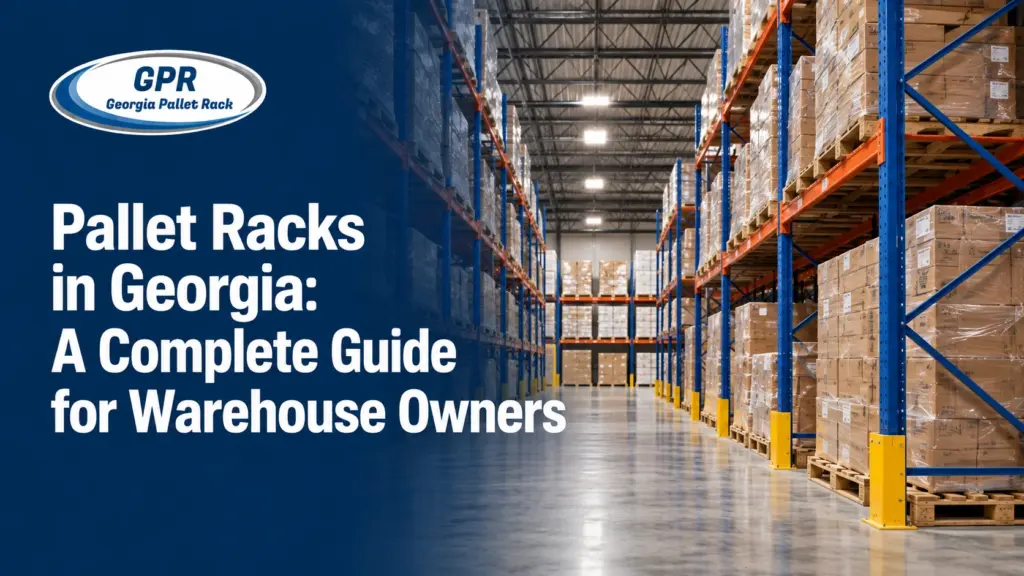
Choosing the right storage system is an important decision for any warehouse. The right pallet racks can increase usable space, improve inventory organization, and make daily loading and unloading more efficient. However, not every warehouse needs the same racking design.
When comparing pallet racks in Georgia, warehouse owners should consider their inventory, available space, forklift equipment, load requirements, and plans for future growth. A well-planned system should support safe operations while making products easy to store, locate, and retrieve.
Why Pallet Racks Matter in a Warehouse
Many warehouses have more available vertical space than floor space. Pallet racks allow businesses to use that height instead of expanding their building or storing products in crowded floor areas.
A properly designed layout can create defined storage locations, improve inventory visibility, reduce unnecessary product movement, and give forklifts clearer travel paths. It can also help employees organize products according to size, category, turnover rate, or shipping schedule.
Before choosing a system, review how inventory enters, moves through, and leaves the facility. The right rack design should support the actual workflow rather than simply maximize the number of pallet positions.
Common Types of Pallet Racks
Selective Pallet Racks
Selective pallet racks are one of the most commonly used systems. They provide direct access to each pallet, making them suitable for warehouses that store many product types or need to retrieve individual loads frequently.
This design is flexible and works with many forklift configurations. However, it generally requires wider aisles than high-density systems, so businesses should balance accessibility with available space.
Drive-In Pallet Racks
Drive-in racking allows forklifts to enter storage lanes and place pallets several positions deep. This creates high-density storage and can be useful for warehouses holding large quantities of similar products.
Because access to individual pallets is more limited, drive-in racks may be less suitable for products with frequent turnover or constantly changing inventory.
Push-Back Pallet Racks
Push-back racks use inclined rails and carts to store pallets several positions deep. When a new pallet is loaded, it pushes the existing pallets backward. This system provides greater density while allowing loading and retrieval from the front of the rack.
Push-back racking may be a practical choice for warehouses that need more storage capacity but still require access to multiple product groups.
Pallet Flow Racks
Pallet flow systems use rollers or wheels to move pallets through the rack. They can support first-in, first-out inventory rotation, which may be useful for products with expiration dates or a defined shipping sequence.
These systems can improve product movement, but they require careful planning to match pallet dimensions, load weight, and operating procedures.
Factors to Consider Before Installation
Warehouse owners should measure the facility carefully before selecting pallet racks in Georgia. Important details include ceiling height, floor condition, column locations, doorways, loading areas, emergency exits, sprinkler systems, and aisle widths.
Forklift specifications are also important. The layout must provide enough clearance for forklifts to turn, lift, and position pallets safely. Racks should not block lighting, fire protection equipment, ventilation, or employee walkways.
Load capacity is another major consideration. Each beam, upright, and support component must be suitable for the weight and dimensions of the stored products. Businesses should plan for their heaviest expected loads rather than relying only on average pallet weight.
New or Used Pallet Racks?
Used pallet racks may be an option for businesses managing a limited budget or expanding storage in stages. However, used equipment should be inspected before installation. Look for bent uprights, damaged beams, corrosion, missing safety components, and signs of improper repairs or modifications.
The lowest purchase price does not always represent the best value. A rack system should be safe, compatible with the warehouse layout, and suitable for the expected load. In some cases, a combination of new and inspected used components may meet both operational and budget requirements.
Safety and Maintenance
Pallet racks should be installed correctly, anchored where required, and inspected regularly. Employees should be trained to load pallets evenly, avoid exceeding marked capacities, and report damaged components immediately.
Forklift impacts, overloaded beams, missing safety pins, and uneven floors can affect rack stability. Regular inspections can help identify problems before they lead to product damage or employee injuries. Any damaged component should be evaluated before the rack continues to be used.
Planning for Future Growth
Warehouse needs can change as inventory levels, product sizes, order volumes, and equipment change. A modular rack system may make it easier to add levels, rearrange bays, or expand storage areas later.
Planning for future growth can also reduce disruptions. Instead of replacing an entire system, a business may be able to adjust selected sections as operations develop.
Georgia Pallet Rack provides pallet racks in Georgia along with warehouse storage products and related services. Its product range includes selective, push-back, drive-in, and pallet-flow racking, as well as used pallet racks, pallet rack uprights, step beams, pallet supports, and row spacers. The company also offers rack installation, replacement, take-down, relocation, and custom storage solutions. These products and services can help warehouse owners plan storage around their inventory, facility layout, equipment, load requirements, and safety needs.